Water Conservation

Welcome to the Centre Wellington Water Conservation Page. You will find resources for water efficiency, education and conservation on this page, as well as updates on water conservation projects and initiatives taken on by the Township.

Our Programs and Initiatives

Our programs help residents and organizations throughout our township to use water wisely, improve efficiency, and protected our shared groundwater. We offer:

  1. Practical tips and advice
  2. Helpful resources
  3. Rebate opportunities

Our Programs

Water Conservation By-law for Outdoor Water Use

The Township maintains a year-round watering restriction through By-Law 2024-66.

The use of municipal water through a hose or other attachment for lawn watering is subject to the following regulations:

  • Homes with EVEN house numbers – watering is allowed on EVEN calendar days.
  • Homes with ODD house numbers - watering is allowed on ODD calendar days.
  • Outdoor use for the above activities is only permitted between the hours of 6 a.m. – 9 a.m. and 6 p.m. – 9 p.m.

People must obey watering restrictions or fines may result.

The Outdoor Water Use Program has several levels that may change throughout the year,

Click here to view the Water Use Levels 0-2 Chart.

Click here to view the Water Use Levels 0-3 Chart.

Exemptions are permitted, but must be applied for.  For further information regarding outdoor water use, please contact us.

Apply for a Sod Watering Permit by clicking here.

In the case of an extreme emergency, the Township has the authority to ban any non-essential uses of water.

Resources for Homeowners

The best way to reduce water waste in your home is by understanding how much water you use and where your water is used most.

How to calculate average monthly water use, per person for your household:

1.      Find the water section of your utility bill.

2.      Look for the area listing “Consumption” on your bill. Water use is measured in cubic meters (m3).

3.      Take your monthly household consumption and divide it by the number of people living in your home.

4.      Divide the number from step three by the number of days that month.

5.      Convert the m3 to liters by times the number from step four by 1000.

6.      This will give you the average daily water use per person in your household.

Example: A four-person household in the Township of Centre Wellington with a household consumption of 19.02m3.

1.      Divide the total household consumption by the number of residents:

19.02 m3 ÷ 4 = 4.75 m3 per person per month

2.      Divide the consumption per person per month by the number of days in that month:

4.75 m3 ÷ 30 days = 0.1585 m3 per person per day

3.      Multiply the consumption per person per day by 1000:

0.1585m3 x 1000 L/ m3 = 158.5 L per person per day

In Centre Wellington the approximate average of water use per person per day is 158.5 L. Is your average daily water use per person higher or lower than the average Centre Wellington resident? If it is higher you may want to review some of these water and money saving tips.

In the Bathroom

  • Install high-efficiency toilets (check out our Residential Toilet Rebate program);

  • Refrain from using the toilet as a garbage can;

  • Take shorter showers;

  • Turn off the water while brushing your teeth and shaving;

  • Use faucet aerators;

  • Utilize low-flow showerheads

In the Kitchen

  • Defrost food in the refrigerator instead of filling up the sink;

  • Utilize the dishwasher and fill it up;

  • Collect leftover water from your water bottle to use for houseplants and pets.

In the Utility/Laundry Room

  • Run full loads of laundry;

  • Upgrade to an energy-efficient washer, dryer, and water heater;

  • Upgrade to a high-efficient water softener that only softens the water that needs it (check out the Water Softener Rebate we offer);

  • Wash your clothes in cold water.

Outdoor Water Use

  • Refer to the tips in the Outdoor Water Use Tips section on this Webpage.

Smart Watering Tips

  • Lawns only need about 2.5 cm (1 inch) of water per week including any rain.

  • The height of the lawn should be 7.5 cm (3 inches) to protect and promote deeper root growth, retain moisture, and help crowd out weeds. Consider leaving grass clippings on your lawn as they act as nutrient rich mulch.

  • If you have an irrigation system, install water sensors to prevent the system from running on days when it is raining to protect from over-watering. 

  • Consider placing a rain barrel at the downspout to collect untreated water to use in your garden. Use mulch in your flowerbeds and around trees to retain moisture.

  • Don't be afraid to let your grass go brown - it's not dead! Grass can go dormant for more than 6 weeks without water and bounce right back!

Choose Native Plant Gardens

  • Native plants are those that would otherwise grow in the wild in our area, and they use much less water and are well suited to our local climate compared to non-native plants.

  • Native gardens can help with water infiltration into the sub surface to replenish our aquifers, and prevent excess runoff that can occur with large mowed lawns.

Leaks can be costly in water loss and money. Dripping faucets and other leaks can add up over time. 

Review this table for where to check for leaks within your home: 

Fixture or Appliance
How to Check for a Leak

Water Heater

  • Check beneath the tank for pooling water, rust, or other signs of leakage.

Water Softeners

  • Check all connections are tight and for cracks or damage on hoses.
  • The rotor valve is the source of water into the unit (located on the top of the water softener) and is often the source of leaks.

Faucets/Taps

  • Check all faucets and pipes periodically.
  • Watch and listen for drips.
  • Check faucet sprayer to make sure water is spraying smoothly and clean openings as needed from build-up.

Kitchen Appliances

  • Check for pooling water underneath dishwashers and refrigerators with ice makers, which could indicate a supply line leak. 
  • Check the surrounding area around sinks for wet spots, water stains, a musty smell, bowed cabinetry or rust around joints and edges. 

Areas throughout the house

  • Water-using devices can leak and cause damage to household infrastructure, potentially creating an environment for mold or mildew, so check for signs of moisture or mold on your walls, ceilings and floors.
  • Leaks may not be occurring constantly, meaning they only occur while operating water-using device. Run water-using devices such as dishwasher or washing machine to see if a leak occurs while running. 

Toilet Leaks

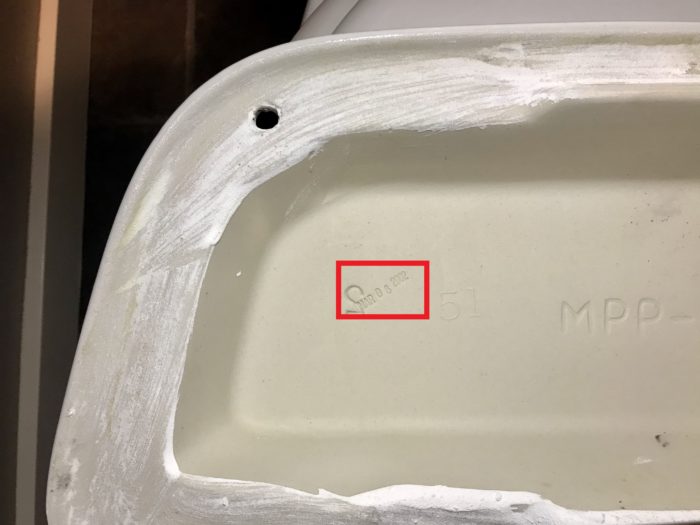
Your toilet can silently leak up to 330 liters a day. That’s about $60 a month in lost water. In many cases, replacing the flapper (the seal between the tank and the bowl) can be an easy fix. If you haven’t changed the toilet flapper in several years, it is worth checking for a leak.

How to check if the toilet flapper is leaking:

  1. Add a few drops of food colouring to the tank of the toilet.
  2. Wait 15 to 30 minutes.
  3. Look in the toilet bowl. If you see food colouring, you have a leak.
  4.  Flush the toilet to avoid staining.

Fix-A-Leak Week 

Fix-A-Leak Week happens every March - This year it runs from March 16th to 22nd with March 22nd also being Word Water Day!

If you want to see the latest highlight of our Fix-A-Leak Week campaign, visit our Facebook page here: Centre Wellington Facebook

Here is the link to the Fix-A-Leak Week 10-minute challenge checklist! 10 MINUTE CHALLENGE

Resources for Industrial, Commercial and Institutional Owners

The following are a selection of water efficient building guidelines for use during the design stage of a construction project:

  • Prepare a water saving action plan for your project that includes actions during construction, appliances and plumbing to be installed, reuse potential, landscaping and rainwater utilisation.

  • Ensure that water conservation and the protection of water quality is included in all tender and contractual documentation.

  • Consider the feasibility of greywater use - water from sinks, showers or clothes washers (greywater) can be recycled to flush toilets or irrigate plants. Be aware that it is important to properly maintain these systems, as poor maintenance can lead to poor quality water which can be hazardous to human health and the environment.

  • Design the roof elements to collect rainwater for storage and re-use in tanks, ponds, or underground tanks.

  • Harvest rainwater from car parks by avoiding the use of curbing and directing runoff into recharge zones.

  • Design ground surfaces and paved areas to slope away from buildings and structures in such a way that water runoff can either be collected or return to landscaped areas.

  • Consider using permeable paving, consisting of porous above-ground materials (e.g., open pavers, engineered products), a base layer designed to drain water away from the building, and (often) a 6-inch-deep (150 millimeters) subbase.

The following are a selection of water efficient building guidelines for use during the construction stage of a project:

  • Shade concrete to prevent evaporation without relying on excess cooling water.

  • Wash heavy equipment with closed-loop water recycling systems, or use grey water to clean work surfaces, tools and equipment.

  • Check hoses for leaks and replace leaky nozzles, when necessary, even small leaks over a long period of time can waste a large amount of water.

  • Invest in low-volume pressure washers and/or water-efficient hose nozzles that maintain effectiveness but use less water.

  • Sweep with a broom instead of hose to clean site surfaces, pathways and gutters.

  • Wash tools in buckets instead of running water, this can save a large amount of water over the duration of a construction project.

The following are a selection of water efficient building guidelines for use while finishing the interior and plumbing (fixtures, appliances, etc.) of a project:

  • Stay up to-date with the latest opportunities for water conservation design and appliances.

  • Minimize the distance between hot water tanks and taps (this will save water and the cost of unnecessary piping and energy costs).

  • Choose plumbing fixtures that have built-in flow restricting devices.

  • Install fixtures and appliances that comply with highest available water efficiency rating (e.g. ultra-low flow toilets, water efficient taps) or if possible, install composting toilets or waterless toilets and urinals.

  • Consider alternatives to evaporative cooling towers for building air conditioning, such as heat pump technology.

  • Use water sub-meters for areas where significant water use will take place, which can help itemize water use and better detect any leaks.

The following are a selection of water efficient building guidelines for use while finishing the landscaping of a project and preparing irrigation:

  • Create separate zones for each type of bedding area based on watering needs, and use of pressure regulation for every zone (valve or sprinkler) used to irrigate the landscaping.

  • Use of check valves on sloped irrigation zones where needed to prevent low head drainage.

  • Flow sensing with a master valve and irrigation controller that responds to a high-flow occurrence.

  • Use of smart irrigation control technology (weather based, soil moisture sensors, rain sensors, etc.) to prevent overwatering and water waste.

  • Design ground surfaces and paved areas to slope away from buildings and structures, this will enable water to run onto surrounding garden areas and recharge zones and maximize infiltration of water through use of permeable landscaping to recharge groundwater.

  • Consider planting Indigenous (local) plants throughout landscaped areas as they typically have low water requirements and are suited to local climatic conditions.

Education Resources

Contact Us

Township of Centre Wellington
1 MacDonald Square, Elora, Ontario, Canada, N0B 1S0
Phone: 519.846.9691
Email Us
Map this location

Check out how many plastic water bottles the CW Water Cart has offset for the 2026 season:

As of July 2026 : 

5,400 Bottles!

Sign up to our Newsletter

Stay up to date on the city's activities, events, programs and operations by subscribing to our eNewsletters.